How to Pick the Perfect Fit: Clothing Size and Measurement Guide
Finding clothes that fit perfectly can feel like a challenge — especially when sizes vary from brand to brand. One label’s “Medium” might feel like another’s “Small,” leaving you guessing and often frustrated. The truth is, the secret to great style isn’t just what you wear — it’s how well it fits.
Follow this clothing size and measurement guide to ensure your outfits fit comfortably, look stylish, and enhance your body shape. A well-fitted outfit enhances confidence, comfort, and overall appearance. This detailed guide will help you understand clothing sizes, take accurate measurements, and choose garments that flatter your body type every time.
To Pick the Perfect Fit :-
1. Why Fit Matters More Than Size
Before diving into measurements, it’s important to understand that fit and size are not the same thing.
- Size refers to standardized labels like S, M, L, 32, or 38.
- Fit determines how the garment sits on your body — slim, regular, relaxed, or oversized.
Even if two people wear the same size, their preferred fit may differ depending on their body shape and style. A perfect fit balances comfort, mobility, and proportion, ensuring the garment complements your natural silhouette.
Remember: Clothes that fit well make even a simple outfit look polished, while ill-fitting pieces can make even expensive clothing appear sloppy.
2. Understanding Clothing Size Systems
Different countries and brands use various sizing systems, which can be confusing. Here’s a quick overview:
- US Sizes: Typically labeled with numbers (e.g., 2–16 for women, 30–40 for men’s pants).
- UK Sizes: Slightly different from US; for instance, a US women’s size 6 equals a UK size 10.
- European Sizes: Use a numerical system (e.g., 36–46 for women, 40–54 for men).
- Asian Sizes: Generally smaller; a “Large” in Asia may equal a “Medium” or even “Small” in Western sizes.
When shopping online, always refer to the brand’s size chart, as each company may have slight variations. Don’t rely solely on what you “usually wear” — check your body measurements against the chart before buying.
3. Know Your Key Body Measurements
Taking accurate measurements is the foundation of finding your perfect fit. You’ll need a soft measuring tape, a mirror, and ideally a friend to help for accuracy.
For Men:
- Neck: Wrap the measuring tape around the base of your neck, at the point where a shirt collar naturally rests, ensuring it’s snug but not tight.
- Chest: Wrap the tape around the fullest part of your chest, under your arms.
- Waist: Wrap the measuring tape around your natural waist, slightly above your belly button, ensuring it’s comfortably snug without tightening.
- Hips: Place the measuring tape around the widest part of your hips and backside, keeping it level and relaxed for an accurate measurement.
- Shoulders: Measure straight across your upper back from the tip of one shoulder to the other where a shirt’s shoulder seams would line up.
- Sleeve Length: Start from the center of the back of your neck to your wrist.
- Inseam: Run the measuring tape from the inside of your thigh at the crotch all the way down to the top of your ankle for the correct leg length.
For Women:
- Bust: Measure around the fullest part of your chest while keeping the tape level.
- Waist: Loop the measuring tape around the smallest part of your midsection—typically slightly above your belly button—making sure it rests comfortably without squeezing.
- Hips: Wrap the measuring tape around the fullest area of your hips and seat, keeping it level for an accurate measurement.
- Hips: Measure around the widest part of your hips.
- Shoulders: From one shoulder tip to the other, across the back.
- Arm Length: From shoulder seam to wrist.
- Inseam: From crotch to ankle bone for pants or jeans.
Tip: Always measure in inches or centimeters as per the brand’s sizing guide. Keep the tape snug but not tight — you should be able to slide a finger underneath it and Pick the Perfect Fit
4. Understanding Different Fits

Every clothing item has its own fit type. Knowing these will help you choose styles that align with your body shape and comfort level. And help to Pick the Perfect Fit
For Tops (Shirts, Tees, Jackets):
- Slim Fit: Tailored close to the body for a modern, sleek look. Ideal for lean builds.
- Regular Fit: Slightly relaxed but still structured. Works for most body types.
- Relaxed/Oversized Fit: Looser through the chest and waist for casual comfort.
For Bottoms (Pants, Jeans, Trousers):
- Skinny Fit: Narrow through the thighs and calves; best for slim figures.
- Slim Fit: Slightly tapered but not tight; versatile and stylish.
- Straight Fit: Same width from thigh to ankle; classic and timeless.
- Relaxed Fit: Roomier through the seat and thighs for extra comfort.
Understanding fit preferences ensures you choose clothing that complements your build rather than working against it.
5. The Importance of Fabric and Stretch
Fabric plays a huge role in how clothing fits. Two garments of the same size can feel very different of pick the perfect fit on the material.
- Natural fabrics like cotton, linen, and wool tend to shrink slightly after washing, so you may want a slightly looser fit.
- Stretch fabrics (with elastane or spandex) provide flexibility and can adapt to your body shape.
- Denim with 1–2% elastane offers comfort while retaining structure.
Pro Tip: Always check the fabric composition on the label. If a garment feels stiff or overly tight, a small percentage of stretch material can make a big difference in comfort and fit.
6. Common Fit Issues and How to Fix Them
Even if you know to pick the perfect fit size, sometimes clothes just don’t fit perfectly. Here are common issues — and what to look for instead:
| Fit Issue | Cause | Fix/What to Look For |
| Shirt gaps between buttons | Too tight around chest | Size up or choose stretch fabric |
| Pants bunch at the crotch | Rise too short | Try mid-rise or regular-rise pants |
| Jacket pulls at shoulders | Too narrow | Go one size up or choose broader cut |
| Sleeves too long | Standard length too big | Look for petite or tailored options |
| Waist fits, but hips are tight | Cut too straight | Try curvy fit or A-line styles |
If you find something you love but it’s slightly off, consider professional tailoring — a small adjustment can make an average fit look custom-made.
7. How to Measure for Online Shopping
Online shopping can be tricky, but with your measurements ready, it becomes much easier to Pick the Perfect.
Steps to follow:
- Refer to the brand’s size chart before purchasing.
- Read product descriptions carefully — look for words like “slim fit,” “relaxed,” or “true to size.”
- Check customer reviews for insights about fit, especially from people with similar body types.
- Note the model’s height and size in photos to gauge proportions.
- When in doubt, size up. It’s easier to tailor something slightly large than too small.
Bonus Tip: Keep a list of your most reliable brands and their sizing for future reference — it saves time and frustration later.
8. The Role of Tailoring in the Perfect Fit
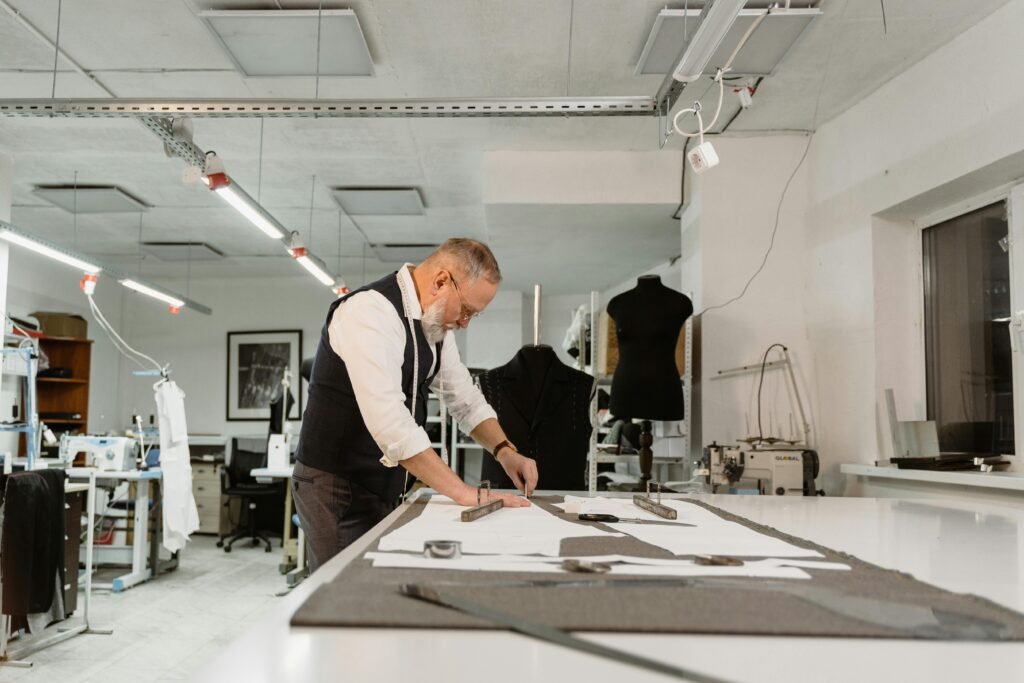
Even high-end brands can’t make clothes that fit everyone perfectly — that’s where tailoring comes in.
A few small alterations can elevate your entire look to pick the perfect fit
- Shorten sleeves or pant hems for precise length.
- Take in or let out waist seams for better proportion.
- Adjust shoulders or darts for a more defined shape.
Investing in tailoring is one of the best ways to achieve a custom-fit appearance without the cost of bespoke clothing. Remember, fit makes fashion personal — it shows attention to detail and self-awareness.
9. How to Try Clothes On the Right Way
When shopping in-store, take your time trying clothes on. Move naturally — sit, bend, lift your arms — to ensure comfort.
Check these points:
- Shoulder seams: The seams should sit neatly at the outer edge of your shoulders, following their natural line.
- Sleeve and pant length: Should end just at the wrist bone or ankle.
- Waistline: Should sit comfortably without digging in or slipping down.
- Overall look: The garment should enhance your shape, not hide it.
If you’re unsure, ask store staff for assistance — they can often recommend better fits or cuts based on your measurements.
10. Confidence Comes from the Right Fit

The best outfit isn’t the trendiest or most expensive — it’s the one that fits you perfectly. When your clothes align with your body’s proportions, you naturally look more confident, comfortable, and stylish.
Perfect fit brings harmony between your posture, movement, and appearance. It’s not about forcing your body into fashion — it’s about finding fashion that celebrates your body.
If you want to see best outfit, click here.
Final Thoughts
Picking the perfect fit is both a science and an art. It requires a bit of self-awareness, attention to detail, and patience — but the reward is worth it. By understanding your measurements, recognizing fabric behavior, and knowing your preferred fit, you can shop smarter and dress better.
In a world where fast fashion encourages quick buying, investing in fit is an act of self-respect and sustainability. Clothes that fit well last longer, look sharper, and make you feel your best every day.
So, the next time you shop — take a tape measure, trust your instincts, and remember: style begins with the perfect fit. (To pick the perfect fit: Follow this clothing size and measurement guide to ensure your outfits fit comfortably, look stylish, and enhance your body shape.)